
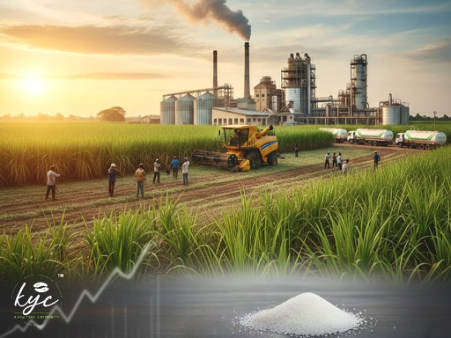
As of December 31, 2025, India’s sugar industry has demonstrated a remarkably robust start to the 2025–26 marketing season, signaling a definitive recovery from the previous year's supply constraints. According to the latest data from the National Federation of Cooperative Sugar Factories (NFCSF), national sugar production reached 118.30 lakh metric tonnes (LMT) during the first three months of the season (October–December). This represents a significant 23.4% increase compared to the 95.60 LMT produced during the same period in 2024, underscoring a season of high operational efficiency and favorable agricultural conditions. This surge in production is primarily attributed to a sharp increase in sugarcane crushing and improved recovery rates. By the end of December, approximately 499 sugar mills were operational across the country, having crushed nearly 1,340 lakh tonnes of sugarcane. This is a substantial leap from the 1,101 LMT crushed in the previous year. Furthermore, the average sugar recovery rate—a key metric of industrial efficiency—improved to 8.83%, up from 8.69% in the prior season. These gains are largely the result of a favorable 2024 monsoon, which ensured healthy crop yields and high sucrose content in the cane. State-wise performance highlights Maharashtra as the standout leader in this growth phase. The state witnessed a dramatic 63% rise in output, producing 48.7 LMT of sugar compared to 29.9 LMT in the corresponding period last year. Uttar Pradesh, India’s largest sugar producer, also maintained a steady upward trajectory with 35.6 LMT, while Karnataka contributed 22.1 LMT. Together, these three states continue to form the backbone of India’s sugar economy, benefiting from expanded acreage and modern milling technologies that have optimized the start of the crushing cycle.
Beyond immediate production numbers, the robust growth provides a strategic cushion for India’s ambitious Ethanol Blending Program (EBP). With gross production projections for the full 2025–26 season reaching as high as 350 LMT, the government has ample room to balance domestic consumption with green energy goals. Current estimates suggest approximately 35 LMT of sugar will be diverted for ethanol production, helping the nation move closer to its 20% blending target without compromising the stability of domestic sugar prices or necessitating imports. In conclusion, the year-end data for 2025 paints a picture of a flourishing sector that has successfully navigated past weather-induced volatility. The 24% year-on-year growth not only ensures a surplus for domestic consumers but also strengthens India’s position in the global market. As the crushing season enters its peak in early 2026, the industry is well-positioned to achieve record-breaking net production, paving the way for potential export relaxations and a more sustainable energy future.