
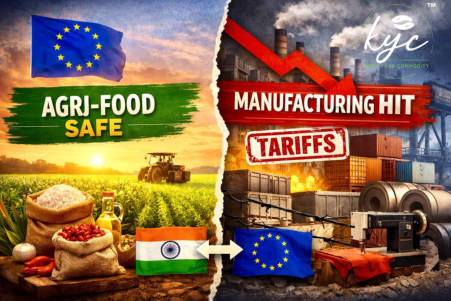
EU “GSP suspension” headlines are creating unnecessary anxiety in India’s agri & food export community. The reality is more nuanced—and (for agriculture) far less dramatic than the headlines suggest. This is closer to rules-based ‘graduation’ than a political sanction. What actually changed (and why): From 1 Jan 2026 to 31 Dec 2028, the EU will suspend GSP tariff preferences for India in a country- specific list of “excluded sections” because imports in those sections crossed EU “graduation” thresholds for three consecutive years (a rules-based trigger under the EU GSP framework). Why agri & food is largely insulated (for now): The EU’s published excluded-sections list for India is concentrated in non-agricultural groups— minerals, chemicals, plastics/rubber, textiles, metals, machinery and transport equipment. No agriculture/food sections appear in India’s 2026–28 exclusion list, so there is no section-wide GSP preference withdrawal hitting HS Chapters 1–24 via this mechanism. That matters because India’s agri exports are a meaningful macro lever, and the EU is a quality- sensitive, standards-intensive destination. In 2024, EU agri-food imports from India were €3.97 bn, up ~20% YoY; key buckets included coffee/tea/cocoa/spices (€0.95 bn), oils/fats and “non- edible technical use” items. So why do impact estimates diverge so sharply? The Commerce Ministry is highlighting that only ~2.66% of India’s exports to the EU lose GSP benefits.
Other assessments argue the coverage is far broader (a much larger share of India’s export lines/value sits in the excluded industrial sections), implying a bigger competitiveness shock for manufacturing—even if the average preference margin is not huge. Practical takeaway for agri & food exporters: 1. Treat this as a near-miss, not a free pass: monitor whether any agri/food sections approach EU graduation thresholds in future review cycles. 2. Map your HS codes and confirm your EU duty treatment (GSP vs MFN vs quota regimes) before pricing the next season’s contracts. 3. Use the breathing room to strengthen non-tariff competitiveness—compliance, residue standards, traceability, and reliability—because tariffs are only one part of the EU buyer calculus.